
Jewellery Care
The guide
Looked after, it outlives the occasion
Nothing here is difficult. Most of it is about what you take off, and when.
A diamond is the hardest thing in the room, but the gold holding it is not, and a film of soap will flatten any stone. Ten minutes of care a month keeps a piece looking the way it did on the day it arrived.
Day to day
Six habits worth keeping
 01
Perfume first, jewellery second
Spray scent, let it dry, then put your pieces on. Alcohol dulls a polished finish over time.
 02
Off before the shower
Soap leaves a film on a diamond that no amount of light will cut through. Rings come off at the basin too.
 03
Mind the lotions
Creams and cosmetics carry acids and oils that build up around a setting and under the stone.
 04
Store pieces apart
A cool, dry pouch or a lined box. Diamonds scratch gold — including the gold on the piece beside them.
 05
Never in the pool
Chlorine attacks the alloys in gold and will tarnish a setting. Salt water is no kinder.
 06
Off at bedtime
Eight hours of pressure against a pillow bends prongs and thins a band faster than a day of wear.
Ten minutes, once a month
Clean it at home
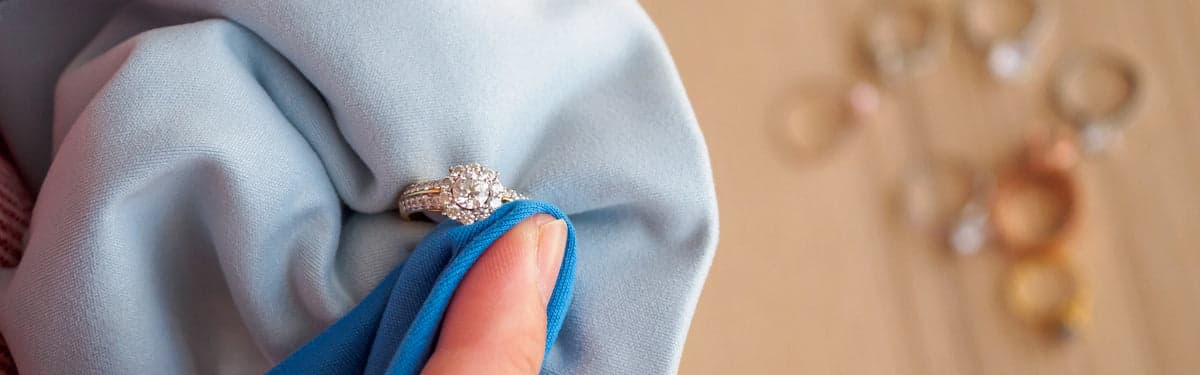
This is the whole method. It works on every piece we make, in every metal, with things you already own.
- 01
Warm water, mild soap
A bowl of warm — not hot — water with a drop of unscented dish soap. Soak for ten minutes.
- 02
Brush behind the stone
A soft, dry toothbrush kept only for this. Work under the setting where film collects, never across the metal.
- 03
Rinse clear
Rinse in fresh water with the plug in the basin. Soap left behind is the reason a stone looks dull again by evening.
- 04
Dry, then rest
Pat dry with a lint-free cloth and leave it out to air for an hour before it goes back in its pouch.
Keep it away from
Four things that do real damage
Ultrasonic cleaners
They lift dirt well and loosen prongs just as well. One loose claw is how a centre stone is lost.
Steam and boiling water
Sudden heat stresses a setting, and can damage anything glued, treated or set with a softer stone.
Toothpaste and baking soda
Both are abrasives. They leave a matte haze on polished gold that only a re-polish will remove.
Household cleaners
Bleach and ammonia eat into gold alloys and strip rhodium plating on sight.
By metal
Each one wears differently
Living with it
- White gold is yellow gold plated in rhodium for its cool, bright finish — that plating is a wearing surface, not a permanent one.
- Keep it away from chlorine and household cleaners, which strip the plating fastest.
- Expect to re-plate every one to two years on a piece worn daily. We do it free for the first two years.
Cleaning it
- Warm water, mild soap and a soft brush.
- Wipe with a soft cloth after each wear to lift skin oils before they set.
Living with it
- Durable and warm-toned, but soft enough to pick up fine scratches through ordinary daily wear.
- Store it separately — the pieces most likely to mark your gold are your other pieces.
- A regular buff with a soft cloth keeps the glow even between cleans.
Cleaning it
- Mild soap solution with a soft-bristled brush.
- Occasional polish with a gold-safe cloth. Never an abrasive paste.
Living with it
- The blush tone comes from copper in the alloy, which makes it sturdy but can deepen slightly with age — most people grow to like it.
- Take it off for heavy work and training; copper alloys mark more readily.
- Keep it dry and cool, ideally in a soft pouch.
Cleaning it
- Warm water with a few drops of dish soap.
- Dry with a microfibre cloth. Anything abrasive will dull the finish for good.
Leave it to us
What the studio handles
Send a piece back whenever it needs attention. Most of this costs nothing — it is part of buying from a workshop rather than a counter.
Arrange a service- Professional clean
- Free for the lifetime of the piece, as often as you like.
- Re-rhodium plating
- Free for two years on white gold, then at cost.
- Resizing
- First resize free within 60 days; after that, quoted before we start.
- Prong check & repair
- A yearly setting check is free — it is the single thing that prevents a lost stone.